Perito Moreno Glacier Month by Month: Calving, Wind, Daylight and the Rupture
This glacier is open all year, which makes the seasonal question sharper than at most: not whether you can go, but what each month trades away. Two things vary enormously — daylight and wind — and one thing cannot be planned for at all.
In this guide
- Open all year, and that matters
- The year, month by month
- December to February
- The shoulder months
- Is winter worth it?
- How bad is the Patagonian wind?
- How much daylight do you get?
- Does the trekking season close?
- Is calving seasonal?
- Can you plan a trip around the rupture?
- How far ahead should you book?
- The short verdict
Open all year, and that matters
Los Glaciares National Park does not close and the road to the glacier is maintained through the winter. That puts Perito Moreno in a small category of major ice attractions with a genuine twelve-month season.
What changes across the year is not access but conditions: daylight from about eight hours in June to seventeen in December, wind that is famous rather than merely notable, and a trekking season that narrows at the edges.
So the question is not “when can I go” but “what does my month cost me”, and the answers are more interesting than the usual peak-and-off-peak story.
The year, month by month
| Month | Daylight | Wind | Crowds | Trekking | The read |
|---|---|---|---|---|---|
| December–February | ~15–17 hrs | Strongest of the year | Peak | Full | Long days, hardest wind, book everything ahead |
| March | ~13 hrs | Easing | Falling | Full | Arguably the best month here |
| April | ~11 hrs | Moderate | Low | Full, thinning | Autumn colour in the lénga forest; excellent value |
| May | ~9 hrs | Moderate | Low | Reduced | Quiet and cold; check trekking availability first |
| June–July | ~8 hrs | Cold and gusty | Lowest | Limited or closed | A viewing trip, not an ice trip. Snow on the walkways |
| August | ~10 hrs | Cold | Low | Resuming | Winter light, returning schedules |
| September–October | ~12–14 hrs | Building | Rising | Full | Spring; unsettled but improving fast |
| November | ~15 hrs | Strong | Rising | Full | A strong shoulder month before the summer crush |
Two things fall out. March and April are the sweet spot on almost every axis. And winter is a real option that most itineraries never consider, with a specific and important caveat about the treks.
December to February
Peak season, and it earns it on daylight. Seventeen hours of light in December means a tour can leave at seven and return at seven with the glacier lit throughout, and the balconies stay warm enough to sit on for an hour.
The costs are real. The wind is at its strongest, which affects the boat safaris more than anything else — rough water cancels sailings, and January is when that happens most. Everything books out: Minitrekking and Big Ice fill weeks ahead, and El Calafate accommodation prices reflect it.
The crowds are manageable on the walkways in a way they are not at, say, Machu Picchu, because the circuits are long and the balconies numerous. The pinch points are the park gate in the morning and the site cafeteria at one o’clock.
The shoulder months
March and April, and October and November, and the first pair is better than the second.
March keeps most of the summer daylight, loses the worst of the wind, and sheds the crowds as the southern school year restarts. Trekking runs at full capacity. If somebody asked for one month, this is it.
April adds the one seasonal spectacle beyond the ice: the lénga forest along the moraine turns red and gold, which is the view trekkers get on the walk to the ice edge and nobody else sees. Daylight is shorter and the air is colder, and the value is excellent.
October and November are spring: improving, unsettled, wind building toward summer. Good months with less certainty than autumn, and rising prices.
Is winter worth it?
For a viewing trip, genuinely yes, with one hard caveat.
June to August gives you the glacier almost to yourself, snow on the walkways and the surrounding peaks, and the low winter sun on the ice front, which photographs unlike anything you get in January. El Calafate is quiet and cheap.
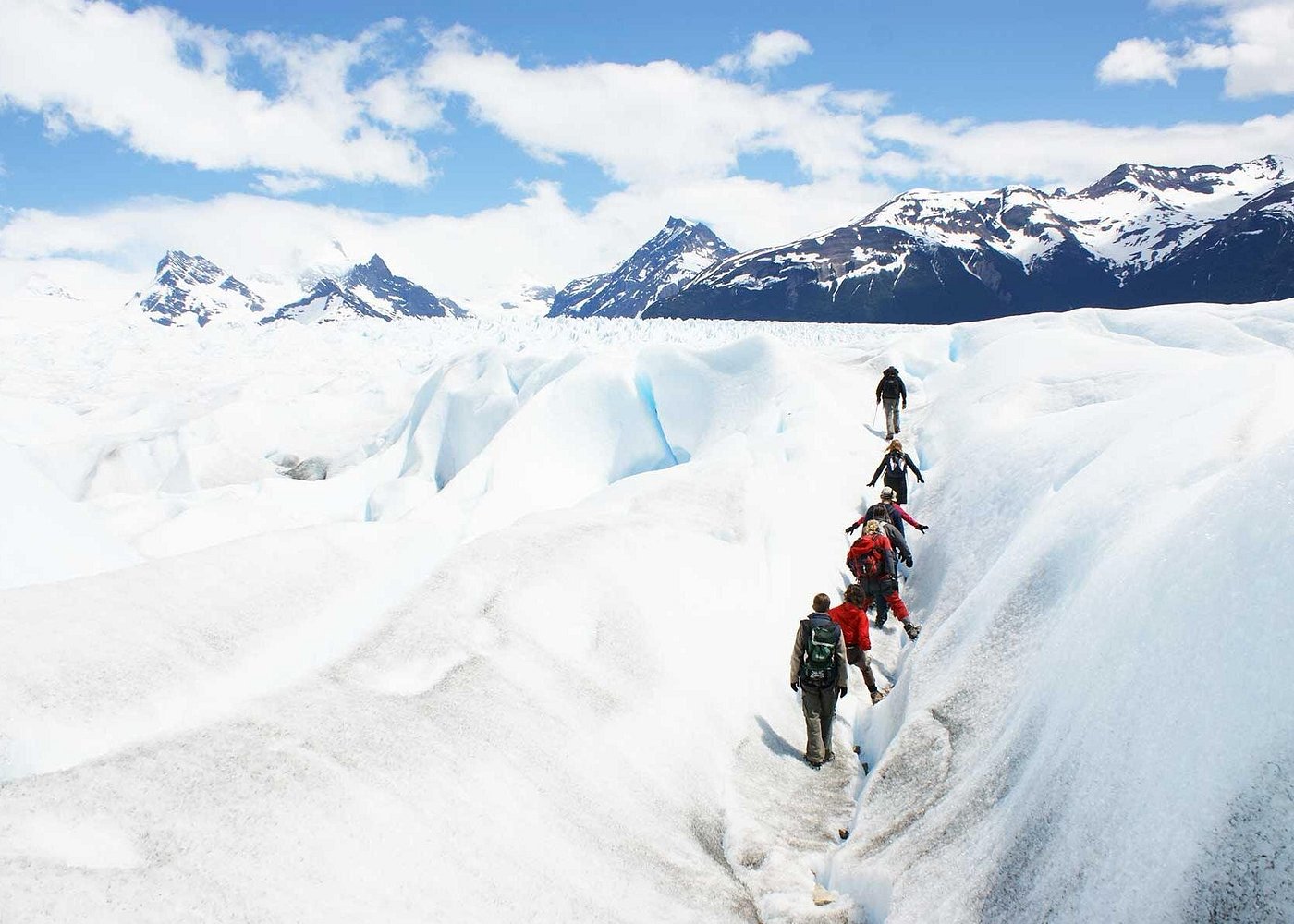
The caveat is the treks. Minitrekking and Big Ice run reduced schedules or suspend entirely in the deepest part of winter, and eight hours of daylight is not much to fit a twelve-hour Big Ice day into. If walking on the ice is the point of your trip, winter is the wrong season.
The other winter factor is the road. It is maintained, but snow and ice make the eighty kilometres slower and occasionally close it briefly. Independent drivers should check conditions rather than assuming.
How bad is the Patagonian wind?
Strong enough to be the defining weather feature rather than a footnote.
It peaks in the southern summer, blows most reliably in the afternoon, and comes off the ice field with nothing between it and you. On the walkways it is exposure rather than danger — the structures are engineered for it — but it takes hats, makes photography harder, and turns a mild day cold.
Where it has teeth is on the water. Boat safaris cancel for rough conditions, most often on summer afternoons, and the refund position varies by operator. If the boat matters to you, a morning sailing in a shoulder month is materially more likely to run than an afternoon one in January.
How much daylight do you get?
From roughly eight hours in June to roughly seventeen in December, which is a bigger swing than most travellers plan for.
In summer it is pure gain: long light, unhurried tours, and the option of a late-afternoon return with the glacier still lit. In winter it constrains the day — a twelve-hour Big Ice itinerary does not fit inside eight hours of light, which is part of why the schedules thin.
Light quality is the other half. The ice front faces roughly east-northeast, so morning light is the flattering one and the wall goes into shadow through the afternoon. On a walkway day that argues for an early departure regardless of season.
Does the trekking season close?
It narrows rather than closing cleanly, and the details vary by operator and year.
Minitrekking runs the longest, typically thinning through May and resuming in August or September. Big Ice has the narrower window: it is a twelve-hour day needing a long light window and stable ice, and it is commonly a September-to-April product.
If the ice is the reason for the trip, book inside October to March and confirm availability before you fix flights. If you are travelling in June and want to walk on a glacier, this is not the season for it here.
Is calving seasonal?
Not meaningfully, and this is a useful thing to know because it removes a worry.
The glacier advances at the front year-round, and the face sheds continually. Small falls happen every few minutes in any month. Large ones happen several times a day, in any month, on no schedule.
Warmer weather may make the face marginally more active, but the effect is nothing like large enough to plan around. A January visitor and a July visitor have broadly similar odds of seeing a building-sized block go, and both improve those odds far more by sitting still for forty minutes than by choosing a month.
Can you plan a trip around the rupture?
No, and it is worth saying clearly because the internet implies otherwise.
The rupture is the event that makes this glacier famous. Perito Moreno periodically advances across the channel until it touches the Magallanes peninsula, damming Brazo Rico. The water on the southern side rises, sometimes by tens of metres, until the pressure carves a tunnel through the ice and the bridge above it collapses.
It is spectacular and it is irregular. The interval between events has ranged from under two years to well over a decade, the mechanism depends on the glacier’s advance, the lake level and the ice thickness at the contact point, and nobody schedules it.
What you can do is watch for news of the dam forming, because once the ice has touched the peninsula and the water is rising, the event becomes likely within months rather than years. That is a reason to change plans you already have, not a basis for making them.
How far ahead should you book?
| When you are going | Walkway tour | Minitrekking | Big Ice |
|---|---|---|---|
| December–February | 1–2 weeks | 4–6 weeks | 6–8 weeks |
| March, November | 1 week | 2–3 weeks | 3–4 weeks |
| April, October | A few days | 1–2 weeks | 2 weeks |
| May, September | A few days | 1 week | Check it is running |
| June–August | The day before | Check it is running | Usually not running |
The treks are the constraint. A walkway day can almost always be arranged locally; a Big Ice place in January cannot.
The short verdict
March, then April. Both keep enough daylight for a full day, lose the worst of the summer wind, run full trekking schedules and cost less than the peak. April adds the autumn forest on the moraine walk, which nobody markets and everybody who sees it remembers.
December to February is the right answer if your dates are fixed by school holidays: long light, everything running, and a wind you dress for.
Winter is a real and underrated option for a viewing trip, and the wrong season if you want crampons on your feet. And whatever month you pick, sit still for forty minutes on a lower balcony — that does more for your visit than the calendar ever will.
Common questions
What is the best month to visit Perito Moreno Glacier?
Is Perito Moreno open in winter?
Does the glacier calve more in summer?
Can I plan a trip around the ice rupture?
How bad is the wind at the glacier?
When does the trekking season run?
Where to go next
- Choosing your day — which options the season leaves open to you
- The day, timed — how daylight changes the shape of it
- The geography of the glacier — the basin, the channel and the rupture mechanism
- Plan your visit — hours, fees and what to carry in each season
- Compare Perito Moreno Glacier tours — every listing from El Calafate, side by side
Tours that fit this trip
Chosen to match what this guide covers, not for what sells.
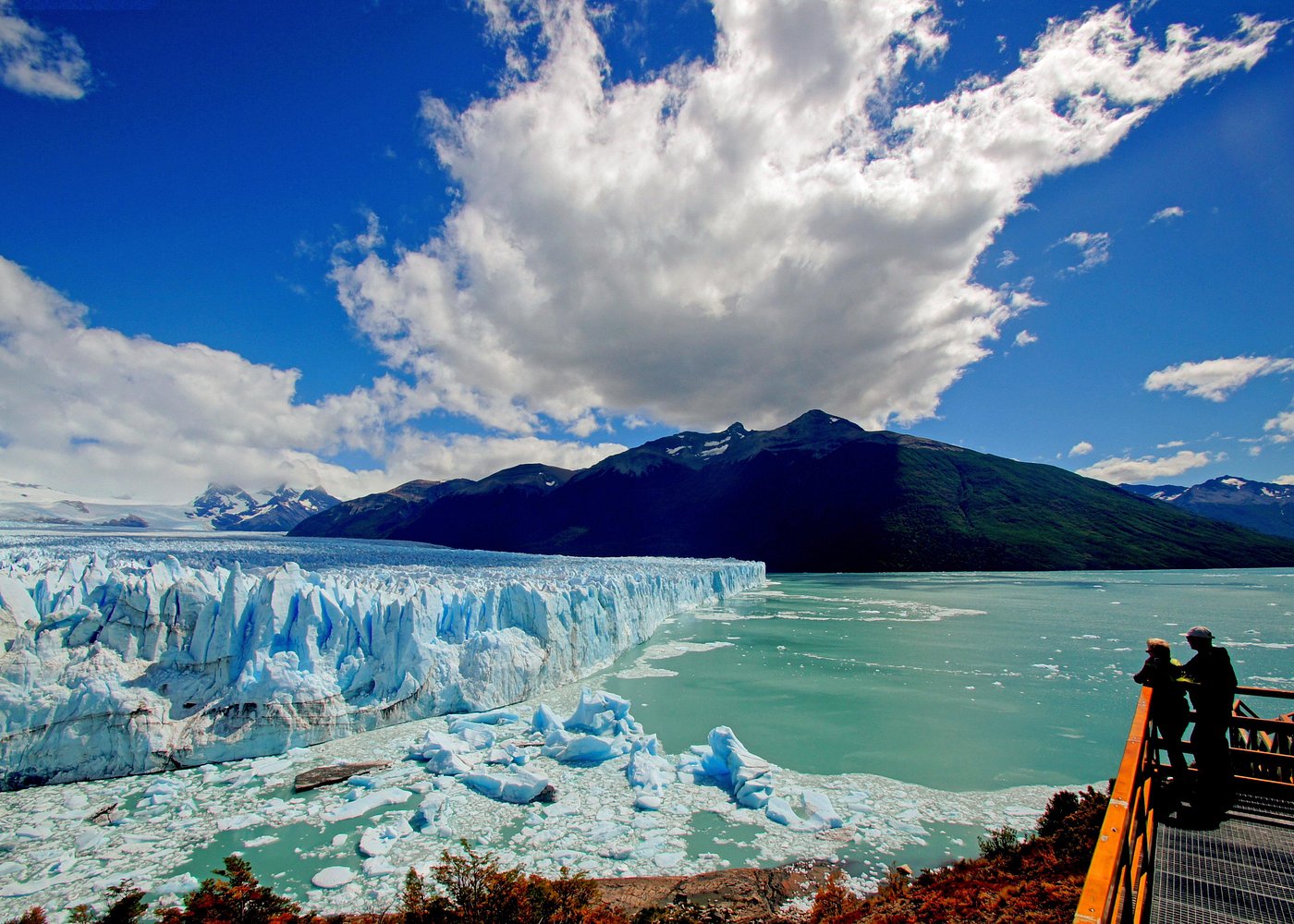
Perito Moreno Glacier Full Day Tour with Optional Boat Safari
The year-round option: a walkway day with the boat offered alongside, which runs in every month the road is open.
From $76 per person
Check Availability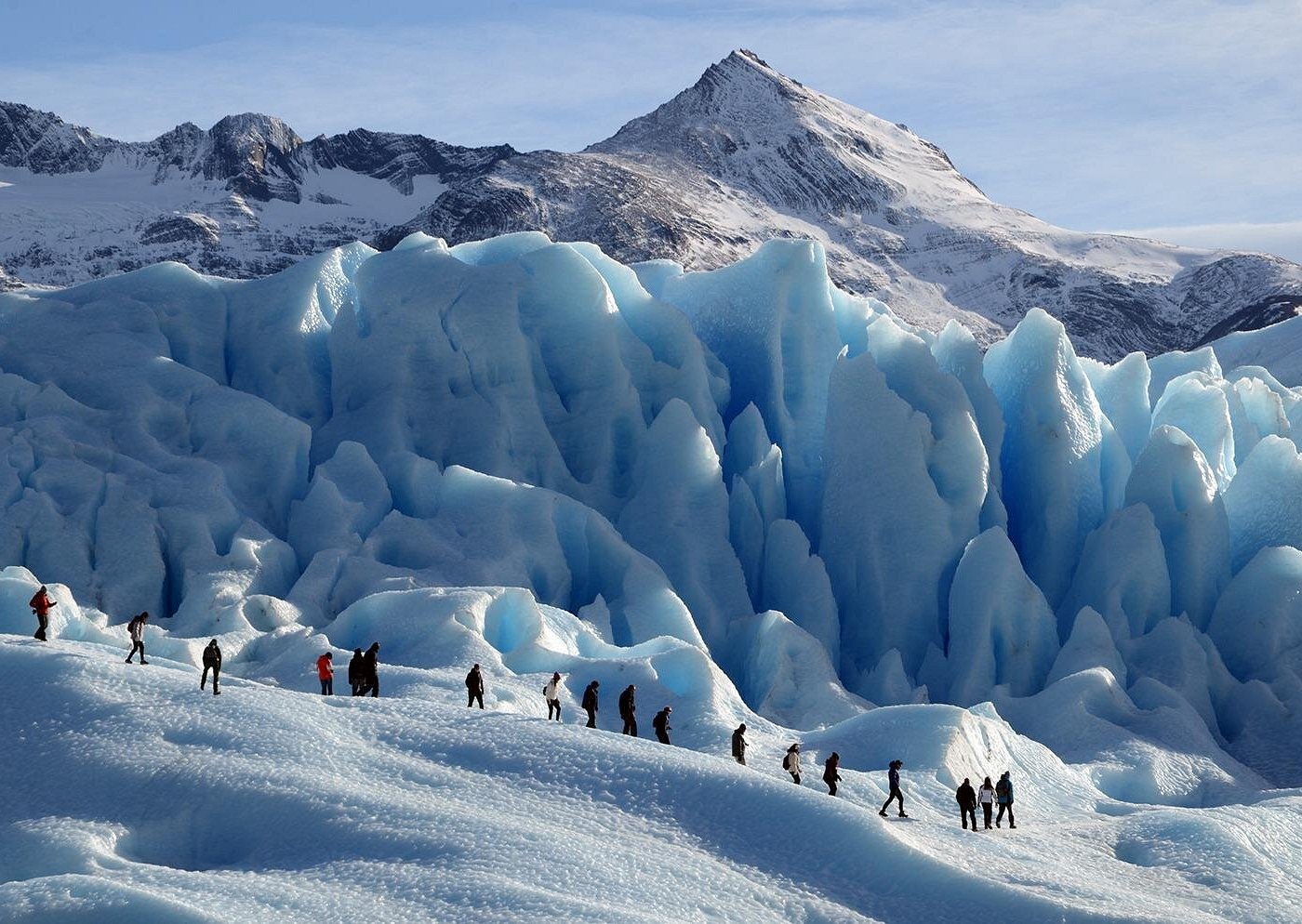
El Calafate Perito Moreno Glacier Minitrekking Adventure Tour
Minitrekking, the trek with the longest season — the one still running when Big Ice has stopped for the winter.
From $475 per person
Check Availability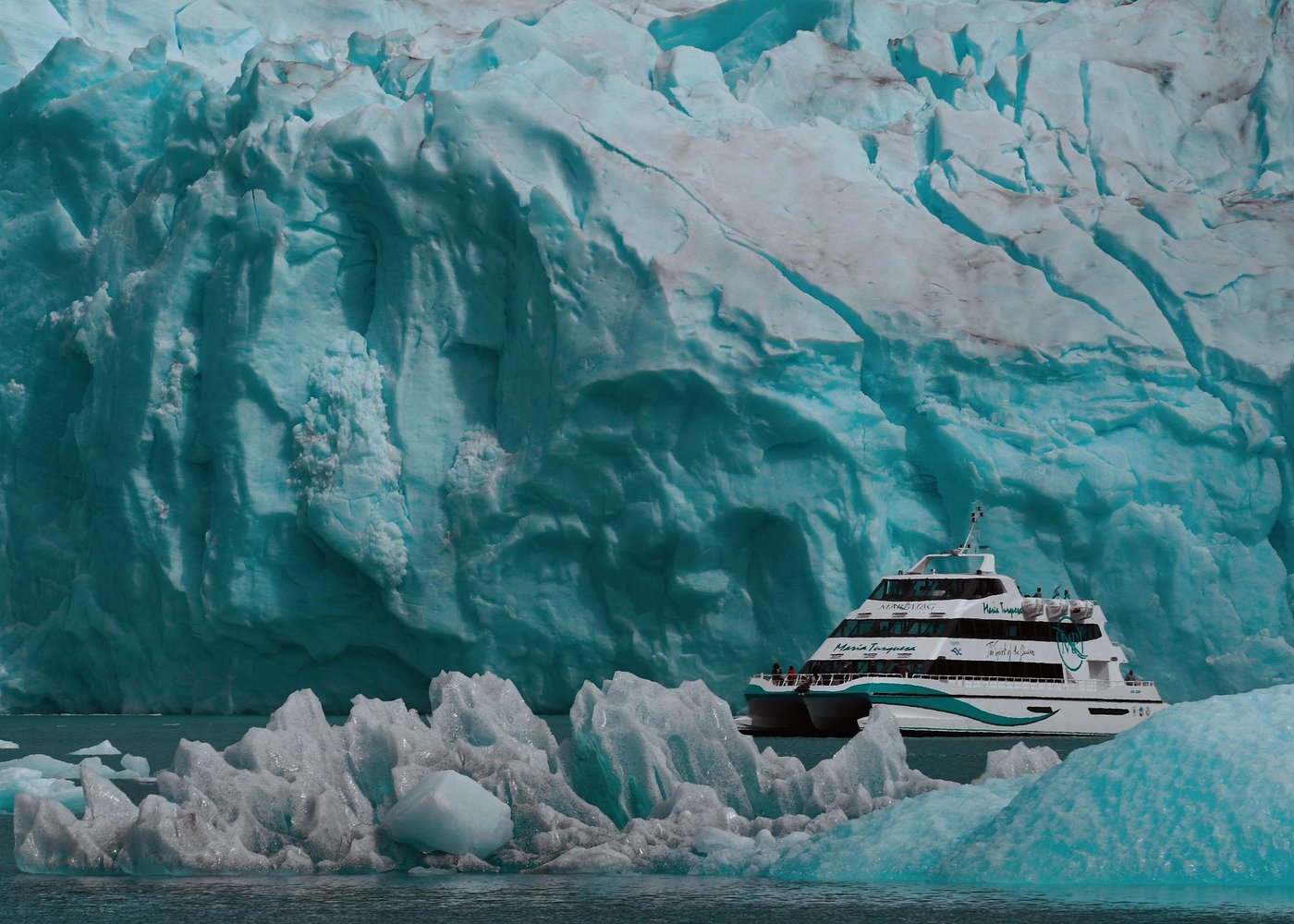
Glaciares Gourmet Navigation: Spegazzini, Upsala & Perito Moreno
The multi-glacier navigation, which comes into its own in the shoulder months when the water is calmer and the light is long enough.
From $225 per person
Check Availability