El Calafate and Back in a Day: The Perito Moreno Glacier Trip, Hour by Hour
Almost every tour here runs eight to twelve hours and travellers consistently underestimate that. The glacier is the easy part; the day around it is a road, a gate, a set of circuits and a long drive back into the wind.
In this guide
- The shape of the day
- The eight hours, timed
- 07:30 — pickup in El Calafate
- The eighty kilometres
- What happens at the park gate?
- 10:30 — the walkway circuits
- When does the ice actually calve?
- Where do you eat?
- 14:00 — the boat, if you added it
- How the trekking days differ
- 17:00 — the drive back
- Where the slack should sit
The shape of the day
Perito Moreno is a day trip, not a stop. There is no accommodation at the glacier and no reason to want any — the whole thing works as a run out from El Calafate and back, and every operator builds it that way.
The road is eighty kilometres of good sealed surface through Patagonian steppe, and it takes about ninety minutes with the stops. The park gate is roughly thirty kilometres before the glacier. The walkways are where the day happens, and the boat and the treks bolt onto that.
A walkway day is eight to nine hours door to door. A Minitrekking day is ten to eleven. Big Ice is twelve. None of them leaves you an evening worth planning.
The eight hours, timed
A walkway day with the boat safari added, in high season, from a central El Calafate hotel.
| Time | Where | How long | What is happening |
|---|---|---|---|
| 07:30 | Hotel pickup | 20 min | A circuit of hotels; the last pickup sets the departure |
| 07:50 | Ruta Provincial 11 | 50 min | Steppe, then the first sight of Lago Argentino |
| 08:40 | Photo stop | 10 min | Most drivers stop where the glacier first appears |
| 08:50 | Park gate | 10–25 min | Entrance fee collected; the queue is the variable |
| 09:15 | Road to the peninsula | 30 min | Down the Magallanes peninsula to the car park |
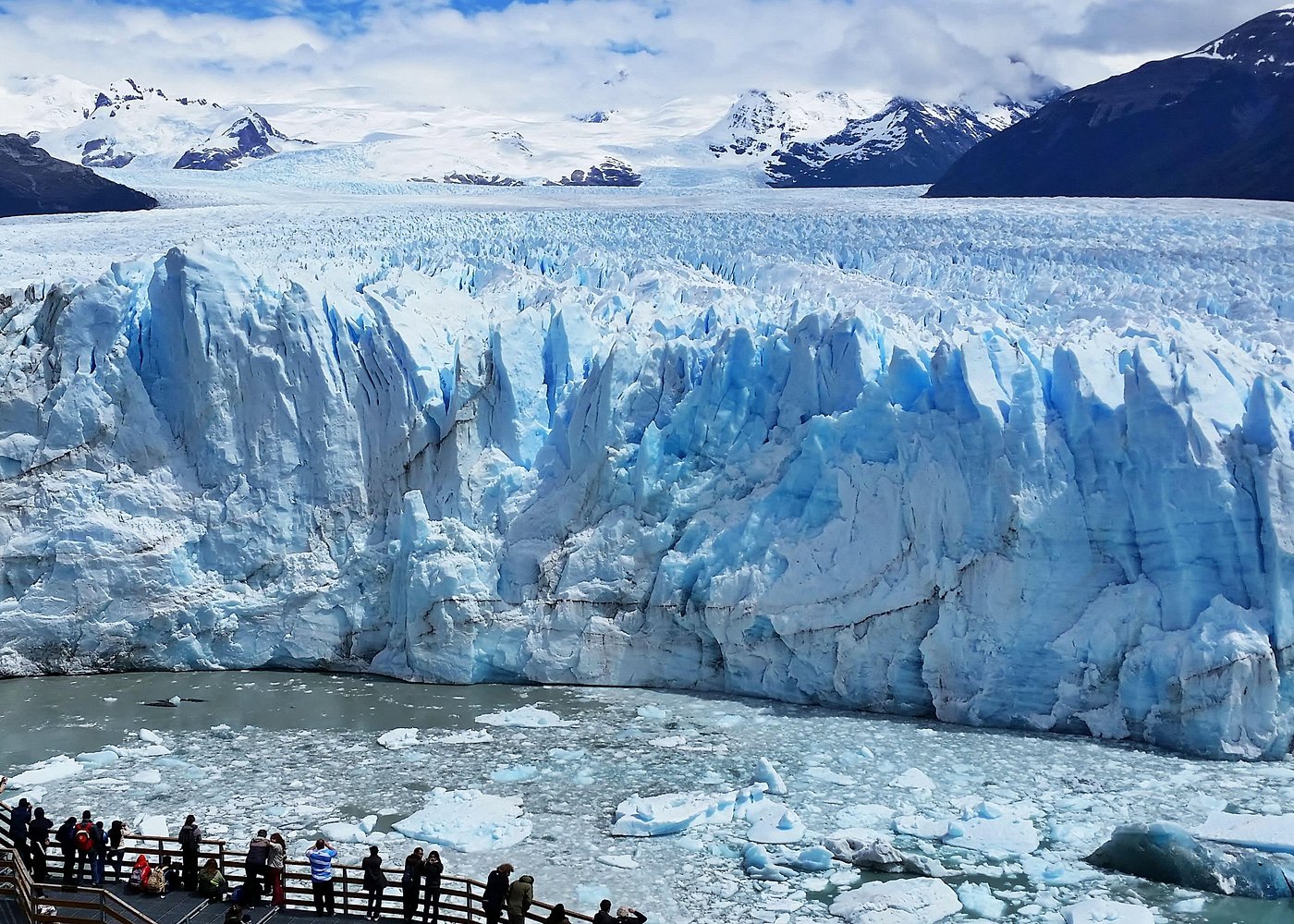
| 09:45 | Upper balconies | 45 min | The whole five-kilometre front in one view |
| 10:30 | Lower circuits | 2 hrs | Descending the walkways; closest to the wall and the sound |
| 12:30 | Lunch | 60 min | Cafeteria at the site, or the packed lunch you brought |
| 13:30 | Free circuits | 45 min | The balcony you liked, again, sitting still |
| 14:15 | Boat jetty | 20 min | Transfer and boarding for the safari |
| 14:35 | On the water | 60 min | Along the front at the foot of the wall |
| 15:35 | Back to the coach | 25 min | Return transfer and headcount |
| 16:00 | Drive to El Calafate | 90 min | Into the afternoon wind; slower than the morning |
| 17:30 | Drop-off | — | Ten hours after the alarm |
Around three and a half hours of that is looking at the glacier, which is the right proportion. The road takes three, the gate and the transfers take one, and lunch takes one.
07:30 — pickup in El Calafate
Almost all tours collect from hotels rather than a central point, which is convenient and costs you twenty minutes. If you are the first pickup you sit on the bus while it does the circuit; if you are the last you have the shortest wait and the worst seats.
Departure times cluster between 07:00 and 09:00. Earlier is better for two reasons: the light on the ice front is best in the morning before the sun swings round, and the Patagonian wind reliably strengthens through the afternoon, which matters for the boat.
Bring cash for the park fee unless your listing states it is included. This is the single most common surprise of the morning.
The eighty kilometres
Ruta Provincial 11 runs west out of El Calafate along the southern shore of Lago Argentino and into Los Glaciares National Park. It is sealed, in good condition, and genuinely beautiful in a spare way — steppe, then estancia country, then the lake opening out.
Ninety minutes with the stops. Most drivers pull over at the point where the glacier first comes into view across Brazo Rico, and it is worth being awake for; the first sight of a five-kilometre ice front from several kilometres away recalibrates what you are about to see.
The return leg is slower. The afternoon wind is a real feature of Patagonia rather than a figure of speech, and drivers take the road accordingly.
What happens at the park gate?
The national park entrance is roughly thirty kilometres short of the glacier and it is where the money changes hands.
Many walkway tours quote transport and guiding only, with the park fee paid separately at the gate, in cash, per person. Some listings include it. The exclusions section tells you which, and reading it is worth more than any other two minutes you will spend on this booking.
The queue is the day’s variable. In January a convoy of coaches arrives within the same half-hour and the gate takes twenty-five minutes; in May it takes five. This is one reason an early departure is better than a comfortable one.
10:30 — the walkway circuits
The passarelas descend the hillside opposite the ice front in a series of loops, colour-coded by length and difficulty, connected by staircases. There is no wrong order, but there is a better one.
Start high. The upper balconies give you the entire five-kilometre front in one frame, which is the shot that explains the scale, and they are the least crowded first thing. Then work down. The lower circuits put you closest to the water, where the colour is most intense and the calving is loudest.
Three to four hours does it properly. Two hours is a rush, and one hour — which some multi-glacier itineraries allow — is not really a visit.
The walkways are steel, well maintained, and involve a lot of steps. There is a step-free route to some of the upper balconies; the full circuit is not accessible.
When does the ice actually calve?
On no schedule whatsoever, which is the answer nobody wants and the only true one.
The glacier advances roughly a couple of metres a day at the front, and the face is constantly shedding. Small falls happen every few minutes. Large ones — blocks the size of a building, the kind that make the whole amphitheatre gasp — happen several times a day with no pattern.
What improves your odds is stillness. Pick a balcony, sit down, and watch for forty minutes. Almost everybody who walks every circuit at speed sees less than the person who did one circuit and then sat.
Sound is the tell. A crack like a rifle shot precedes most large falls by a second or two, which is just enough time to look up if you are already facing the right way.
Where do you eat?
There is a cafeteria and a restaurant at the site, and they are priced as a captive-audience monopoly at the end of an eighty-kilometre road. The food is acceptable and the queue at one o’clock is long.
Most experienced visitors bring a packed lunch from El Calafate and eat it on a balcony, which is a materially better lunch in a materially better dining room. Several tours include a boxed lunch; a few include a restaurant meal, which is the one add-on worth checking the value of.
Water is worth carrying. The air is dry, the walkways are exposed, and the drinking fountains are few.
14:00 — the boat, if you added it
The safari runs from a jetty on the peninsula, boards a purpose-built vessel, and spends about an hour running along the front at a safe distance.
Afternoon sailings are the norm because the walkways come first, and the afternoon is when the wind is strongest. Rough water cancels sailings outright, which is not common but is not rare either, and the refund position varies by operator.
Dress for it. It is meaningfully colder on the water in front of a glacier than on a walkway in the sun, and the wind takes hats.
How the trekking days differ
The first half is the same. The difference starts after the walkways.
- A separate crossing. A boat takes trekkers across Brazo Rico to the southern flank, which the walkway groups never see.
- A forest walk. Twenty to thirty minutes through lénga forest along the lateral moraine to the ice edge.
- Crampon fitting. Guides fit and check every set; this takes longer than you expect with a full group.
- The ice. Ninety minutes on Minitrekking, three to four hours on Big Ice.
- Less walkway time. Usually an hour or so at the end rather than three at the start, and you will be tired for it.
That last point is worth planning around. If the balconies matter to you, ask where they sit in the itinerary rather than assuming.
17:00 — the drive back
Ninety minutes into the wind, and most of the bus sleeps. Arrival in El Calafate is typically between 17:00 and 19:00 depending on the product, and later for Big Ice.
Plan a simple evening. This is a long day with three to four hours on your feet in dry, windy air at altitude that feels higher than it is, and El Calafate’s restaurants do not need booking weeks ahead.
If you have an onward flight, do not put it on the same evening. Delays on this route are ordinary and the airport is small.
Where the slack should sit
- Before the gate. An early departure beats a comfortable one, because the queue grows with the convoy.
- At the balconies. Build in forty minutes of sitting still. It is the single highest-value use of time on this glacier.
- After the tour. Nothing on this day is reliable to the half-hour. A flight, a bus to El Chaltén or a restaurant that assumes it will be the thing that breaks.
What needs no slack is the walkways themselves. They are well signed, the circuits interconnect, and it is not possible to get lost or to lose track of the meeting point.
Common questions
How long is a Perito Moreno Glacier day trip?
Is the national park fee included in the tour price?
How much time do you get on the walkways?
When is the best chance of seeing the glacier calve?
Should I bring lunch?
What time do tours get back to El Calafate?
Where to go next
- Choosing your day — walkways, boat, Minitrekking or Big Ice
- Month by month — wind, daylight and the trekking season
- Getting there — the road, the bus and driving yourself
- Plan your visit — hours, fees and what to carry
- Compare Perito Moreno Glacier tours — every listing from El Calafate, side by side
Tours that fit this trip
Chosen to match what this guide covers, not for what sells.
Perito Moreno Glacier Day Trip with Optional Boat Ride
The timeline above as a booking: the full walkway day with the boat safari offered as the afternoon add-on.
From $83 per person
Check Availability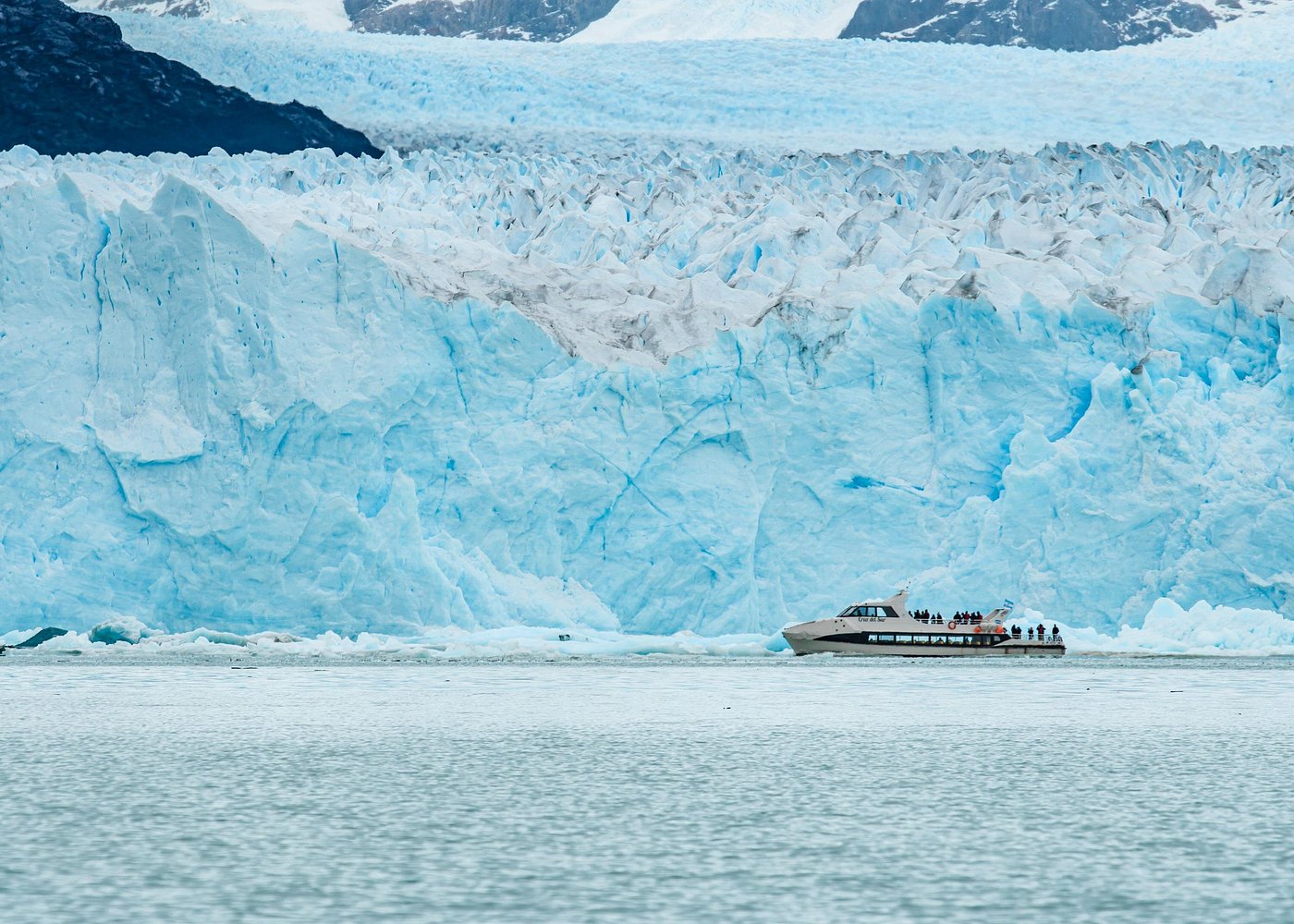
Perito Moreno Glacier with Navigation from El Calafate
The same day with the navigation built in rather than optional, which removes the one decision people make badly on the morning.
From $134 per person
Check Availability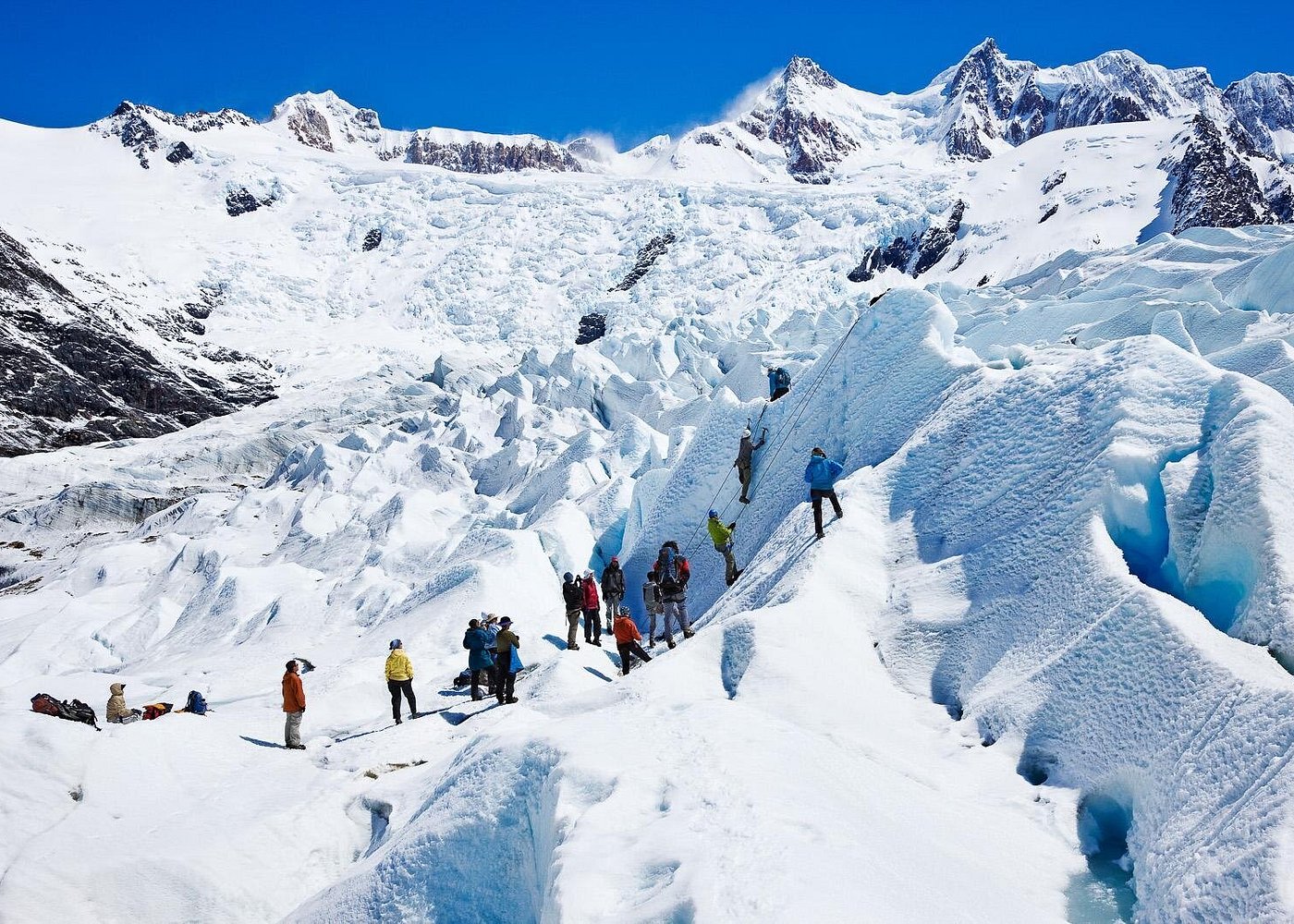
Perito Moreno Full Day Minitrekking with Transfer and Walkways
The trekking version of the day, with transfers and walkway time both accounted for — ten hours rather than eight.
From $440 per person
Check Availability